



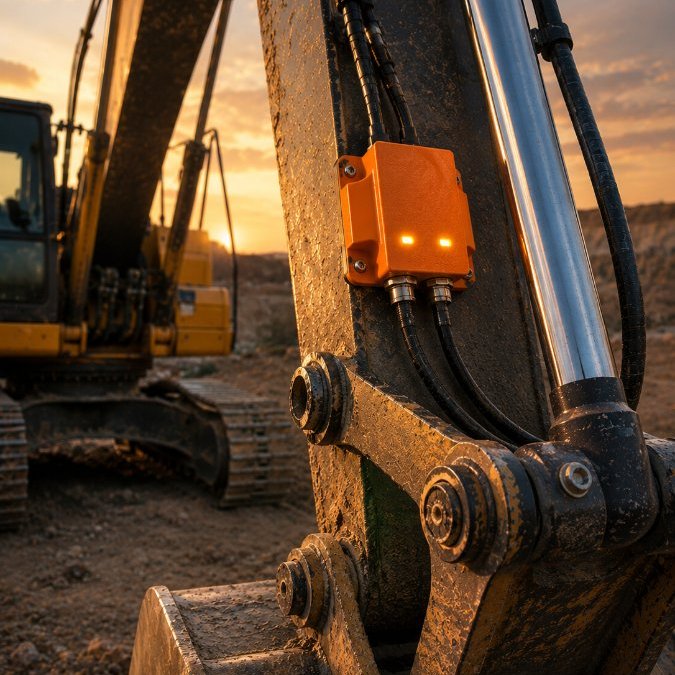
What is an Inclination Sensor? The Role of Precision Measurement in Industry In the industrial world, the balance of machines, structures, or vehicles is not just a matter of safety; it is also the foundation of operational efficiency. This is exactly where inclination sensors (inclinometers) come into play. But what exactly are these small yet critical components, how do they work, and what types are available?
What is an Inclination Sensor? An inclination sensor is a device that measures the angle of an object in the vertical (pitch) or horizontal (roll) axis relative to a gravity reference. Simply put, it converts how "tilted" a surface is into high-precision digital or analog data.
What are the Types of Inclination Sensors? Inclination sensors are divided into different operating principles according to technological requirements:
-
MEMS (Micro-Electro-Mechanical Systems) Sensors: The most commonly used type today. They are known for their small size, low energy consumption, and resistance to impacts. They cater to a wide range of applications, from mobile devices to heavy machinery.
-
Liquid-Based (Electrolytic) Sensors: They measure via resistance changes based on the movement of a special liquid inside. They are preferred for fixed structures requiring very high precision.
-
Capacitive Inclination Sensors: They perform non-contact measurement using the change in capacitance between plates. They are long-lasting and stable.
-
Servo (Force Balance) Sensors: Used in aerospace and military standards for projects where extreme precision is sought.
Where are Inclination Sensors Used? The fields of use for these sensors have spread to every point reached by technology:
-
Construction Machinery and Cranes: Vital for preventing cranes from tipping over and keeping the boom angle within safe limits.
-
Solar Panel Tracking Systems: Ensures that panels track the sun at the most efficient angle throughout the day.
-
Structural Health Monitoring: Prevents potential disasters by tracking millimetric shifts in bridges, dams, and skyscrapers.
-
Agricultural Technologies: Ensures that autonomous tractors and spraying machines remain balanced on uneven terrain.
-
Marine: Used to monitor the roll and pitch movements of ships and platforms.
 LinkedIn
 X
X
 Facebook